Who is an Indian doctor?

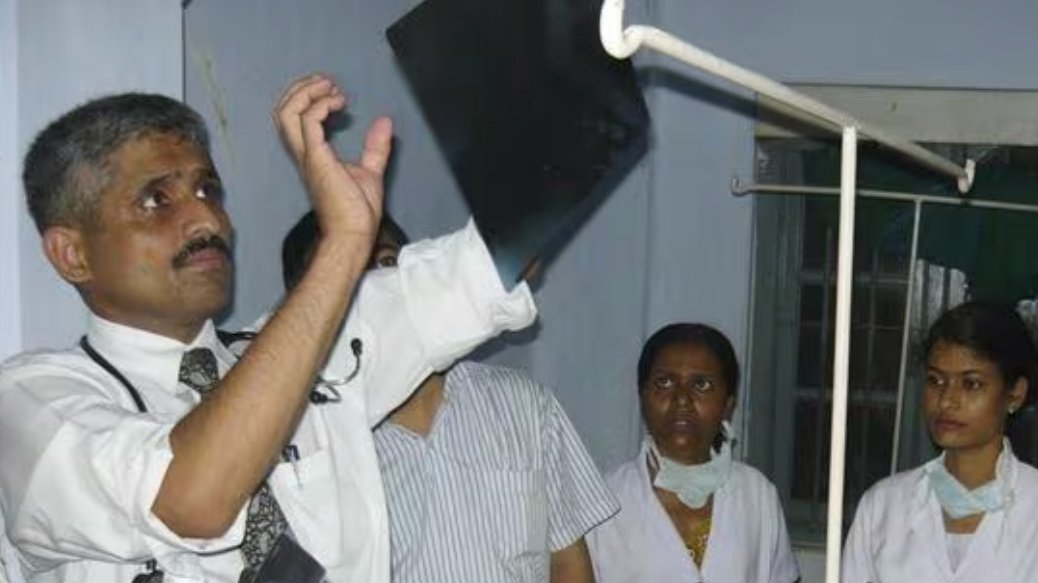
The diversity and inequity of healthcare in India means there is no one "classic" Indian doctor. From general practitioners to specialists, each plays a role in delivering care. There are also non-MBBS doctors, "quacks," academicians, and doctors working outside mainstream medicine. Recognizing this diversity is important to improve healthcare for both doctors and citizens.
A few days prior to Doctors’ Day, which was celebrated on July 1, I received an invite to write on “A day in the life of an Indian doctor”. When I got down to doing it, I hit a basic hurdle. A strange writer’s block. Which ‘Indian doctor’ should I write about? Who really represents a classic contemporary Indian doctor? After some rumination, I refused. But it raised an interesting but uncomfortable question. Who is an Indian doctor? And in turn what must be his or her day be like?
Anyone with a modicum of insight into the diversity of healthcare in India will recognise that there cannot be a monolith called a ‘classic Indian doctor’. There probably never was but now, more than ever before, we need to recognise that it’s a very wide spectrum and that each of us will see doctors depending on where we are located, who we are, what is the nature of treatment we seek and needless to say what we can afford to pay. But there are some broad categories. At the cost of oversimplification, here is an attempt at describing some of them. All of them play their own role in delivering care. And hence could do with acknowledgement on Doctors’ Day.
Though a breed on the decline, we start with the neighbourhood general practitioner. The family doctors. For the middle class and the elite, it is a rare MBBS graduate who has chosen to be a GP in spite of severe peer pressure to be a specialist. In metros, it could occasionally be someone who has formally trained in family medicine. Approachable, friendly, charging low consultation fees, willing to come home and offer advise on many matters including beyond the strict boundaries of health. And someone who guides you to a specialist in case of complex problems.
For the poor, the equivalent is often a non MBBS Ayush doctor who largely prescribes modern medicine. Often someone who has secured an Ayush degree not for the love of that science but as a means to upward mobility and a licence to practice medicine. May also offer drugs from their respective Ayush specialities but commonly doles out tablets packed in paper. Some also offer shots of injections and ‘saline’ for quick relief. Many of them have worked in modern medicine hospitals as resident doctors. As cheap labour. And in turn acquired informal training in modern medicine.
There are those with no degrees who have picked up titbits from working with doctors. Who are called “quacks” but who in some parts of our country are the only go- to medical practitioners. Who treat with intuition, faith and whose main attraction is their availability and low costs. Who are periodically raided and arrested amid much outrage. Only to spring up again.
Then there is the specialist. Someone who has acquired a postgraduate degree in a basic speciality like general medicine, surgery, paediatrics or gynaecology. Many of whom work in that quintessentially Indian institution called nursing home which predated the establishment of the large private hospital behemoths that we see today. For many years, outside of large cities, nursing homes filled the space left open by a dysfunctional public hospital system. The specialist often owns the nursing home. Which means he or she has to also double up as owner, administrator and treating physician. Which leads to challenging conflicts of interest.
More recently we have the superspecialist. Someone who has spent another three years after specialisation to acquire training in a more localised branch of a basic speciality. A cardiac surgeon or a neurology physician. To use a cliché - only because it is so accurate - someone who knows more and more about less and less. But is part of a global trend. Who largely works out of the emerging large private corporate hospital industry. Who can deliver complex care, which was impossible a few years ago often at very high costs. Who moves from hospital to hospital and is increasingly head hunted for their revenue generating abilities. And pontificate on television.
We must not forget the small but important number of doctors who are academicians and teachers in medical colleges though the lines with private practice are blurring. Some of them focus on training, teaching and research. This includes those who work and teach in basic sciences and whose influence on medical students in their formative years is huge. But citizens never see them partly because they are not dealing with patients nor are they in the media.
Finally there is the doctor who has chosen to work outside of mainstream medicine. Either in NGOs who work with communities, underserved areas or even in policy making. In the post-independence generation, many who were fired by idealism and political thought chose to step out of comfort zones to work with social movements and far-flung rural areas. Often at great personal cost.
With apologies for this simplistic generalisation, this list is also reflective of the diversity and inequity of healthcare in India. So if you wished your doctor a ‘Happy Doctors’ Day’ you were of course thanking someone who has made a difference to your life. But if you wish to acknowledge the doctor community of India it may be good to know that this is a very diverse group - some legitimate, some contested, some visible, others in the background, some experts, others with limited skills who have carried the burden of a challenged health care system. Which will not change if we don’t go beyond symbolism to recognise that both doctors and citizens deserve better.